
A flood-proof home
How can our homes deal with climate change? This house in the Munshiganj region can simply be moved when the floods come.
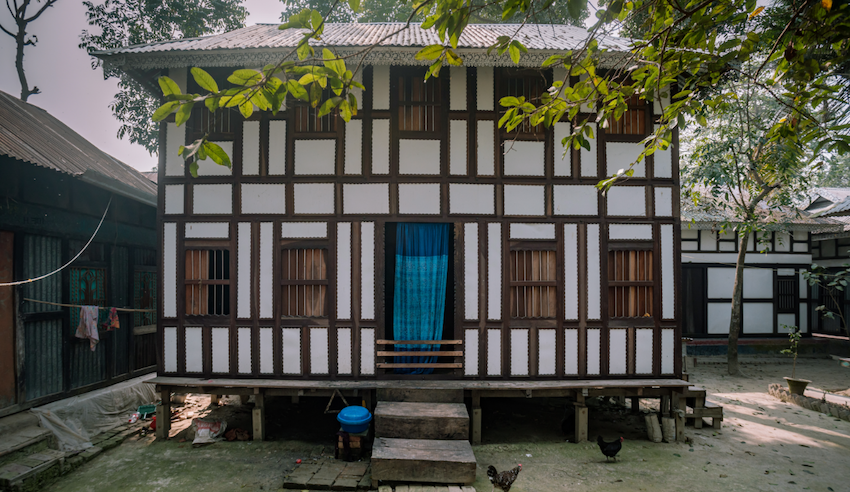

The Limon family house in Munshiganj
Photo: K M Asad for KULTURAUSTAUSCH
Mohammed Limon is 15 years old and lives with his family in this house in the Munshiganj region of Bangladesh. They built it two years ago out of wood and tin because their old house was repeatedly threatened by flooding whenever the nearby Padma River overflowed its banks. Flooding is a big problem in this part of the world.
The family's new home was designed with climate change in mind. If the river level continues to rise, the houses can be dismantled and rebuilt further away from the water. It is one of a number of buildings in this small settlement that can be moved further inland in an emergency. Mohammed's family's abode is designed in the typical style of the area: with many decorative details, both inside and out.
Thanks to the wooden walls, it stays relatively cool even in summer, when the outside temperatures rise up to forty degrees. Mohammed lives here with his younger siblings, his mother and the female members of the extended family. His older brothers work abroad. They are among the few people who can afford the equivalent of around 5,500 euros to build such a house.